
Human-in-the-Loop for AI White Paper
Artificial intelligence is pushing the boundaries of research, making workflows faster and more effective. Enticed by its ability to automate processes, analyze data, and generate insights, growing numbers of organizations are adopting the technology. The healthcare and life sciences sector, in particular, is leading the way in AI adoption and maturity compared to other fields.
As companies hurry to embrace AI, it’s crucial to take a measured approach. Artificial intelligence can create output at lightning speed, but it’s human involvement that ensures reliable results. That’s why a collaborative, human-in-the-loop (HITL) approach is emerging as a best practice. HITL ensures expert oversight of AI to align findings with research goals, maintain data integrity, and generate results in a safe, unbiased, and ethical way.
This paper explores how a HITL framework can help life science companies combine AI efficiency and human insight in research workflows. Discover key areas where AI can streamline processes while research teams guide algorithms, mitigate biases, and assure data quality. By incorporating a balanced approach, companies can lay the groundwork for accelerated breakthroughs in drug discovery, disease identification, and health outcomes.
What is the Human-in-the-Loop Approach in AI?
Human-in-the-loop systems integrate human oversight into processes involving artificial intelligence and machine learning. These approaches bring the critical thinking ability of humans and the speed and efficiency of AI systems together.
HITL differs from fully autonomous AI systems, such as chatbots, robots, and self-driving cars. Fully autonomous models use AI to perform tasks and decision-making without human intervention.
Human-in-the-loop approaches recognize that AI models have limitations — 23% of AI adopters at large global companies evaluate AI output daily, and 31% review the output weekly. Nearly one-quarter of companies had to rethink or override an AI system because of unreliable results, according to research spearheaded by SAS, Accenture Applied Intelligence, and Intel with Forbes Insight.
“With HITL, you’re asking AI to go on the journey with you. You’re working with it to come to a conclusion, and you involve your own thinking. In doing so, you can see and influence the path an AI takes to reach information. This makes it a very natural thing because you interact using conversational language.”
AI as a Tool, Not a Replacement
AI’s computational abilities make it an incredibly powerful tool for researchers, but it’s not a substitute for the human creativity and thought that can drive breakthroughs. Jacqueline Ng Lane, assistant professor at Harvard Business School, conducted research into how AI handled problems requiring diverse expertise and perspectives. The study found that AI is most useful as a collaborative tool, where humans continually work with the technology and refine insights. “We still need to put our minds toward being forward-looking and envisioning new things as we are guiding the outputs of AI to create the best solutions.” Lane said
In a HITL framework, AI complements human judgment and ingenuity. It serves as an engine that helps humans work faster and more accurately. Scientists apply intellectual rigor to ensure findings are aligned with objectives, recalibrating as needed if a project starts to veer off course. “With a HITL approach, AI is enhancing the work you already do. It can enrich and optimize it, ultimately maximizing your efficiency as a researcher.” McGrath noted. “It can enrich and optimize it, ultimately maximizing your efficiency as a researcher.”
How Human-in-the-Loop Can Address Research Challenges in Life Sciences
The life sciences sector is growing rapidly, fueled by transformative discoveries. The number of life science researchers in the United States grew 87% between 2002 and 2022.
However, progress is often incremental due to the resources required to navigate vast amounts of information, maintain data integrity, and achieve regulatory compliance. AI accelerates laborious tasks such as scientific literature review and complex data processing.
Data from artificial intelligence is only meaningful if it’s contextualized. In a sector that impacts lives directly, HITL provides crucial context and builds transparency and trust.
Managing Large Volumes of Data
Between 2012 and 2022, the number of published science and engineering articles increased nearly 60%. A systematic literature review alone can take between 6 months and 2 years.
AI saves significant time by automating discovery of relevant publications, screening large data sets, and condensing information. Humans safeguard the process by assessing quality and confirming findings.
Mitigating Bias and Ethical Concerns
As organizations entrust more workflows to AI, experts are identifying areas of concern that a human in the loop can help manage. AI output depends on the data it’s trained on. Skewed or incomplete data sets result in biased outcomes. Privacy and transparency are also critical concerns.
A HITL framework ensures scientists ask critical questions at key workflow stages, verify representation, monitor sensitive data usage, and audit AI models for accountability.
Why Life Science Researchers Should Adopt a Human-in-the-Loop Approach
Life science research is challenging to execute, demanding significant time, resources, and precision. Artificial
intelligence is an ideal partner for optimizing processes and advancing discovery. It has broad applications and can support diverse methodologies,
including systematic reviews, data modeling, laboratory and experimental research, and observational studies. When AI is applied strategically with human guidance, it translates into significant benefits for life science researchers, including:
- Accelerated workflows, as AI completes routine and time-intensive tasks more quickly.
- Scaled capabilities, as AI processes massive volumes of data.
With resource-intensive tasks delegated to AI, research teams can devote more time to innovative work. “Generative AI is becoming the virtual knowledge worker,” said Ben Ellencweig, a senior partner with McKinsey & Company. “[It has] the ability to connect different data points,
summarize and synthesize insights in seconds, allowing us to focus on more high-value add tasks.”
Streamline Workflows and Save Time
In one study, AI improved the productivity of highly skilled workers by nearly 40%. Organizations can leverage AI to:
- Discover relevant studies and articles
- Compile data from multiple platforms
- Categorize and organize data
- Extract and synthesize information
- Process data and identify patterns and trends
- Enhance understanding through natural language queries
- Manage citations and references for regulatory compliance
- Optimize patient enrollment for clinical trials
A human in the loop ensures due diligence to validate outcomes. Compared to other machine learning approaches, HITL provides the most accurate results. Continuous human feedback improves the quality of predictions, especially when data is biased or limited“For most generative AI insights, a human must interpret them to have impact. The notion of a human in the loop is critical,” added Alex Singla, global leader at QuantumBlack, AI by McKinsey. “The notion of a human in the loop is critical.”
Enable Strategic Research and Collaboration
With AI handling routine tasks, scientists can direct their energies toward higher value critical thinking. They have more time to evolve their research and formulate new questions.
HITL also offers an opportunity to collaborate across functions so teams with different areas of expertise can share insights and tackle problems. AI can facilitate workflow, synthesize information, and generate summaries. Natural language processing can make technical vocabulary easier to understand and more accessible.
A human-in-the-loop model also generates an exciting synergy that can inspire novel thinking. While humans might be constrained by their experiences and viewpoints, AI can challenge preconceptions and spark unexpected associations. It’s also useful as a sounding board for evaluating and refining ideas that lay the groundwork for innovation.
The Future of Human-in-the-Loop Systems in Life Sciences
Artificial intelligence is having a profound impact on the life science sector as companies work to discover new medicines, precisely diagnose diseases, and personalize treatment for individuals. It’s estimated that AI-enabled workflows could make it 40% faster to bring a new molecule to the preclinical candidate stage. This efficiency could also generate cost savings of up to 30%.
Many life sciences companies are at the early stage of AI integration, but 86% of organizations currently using AI expect full integration within 2 years. These companies may see dramatic improvements in productivity.
For example, the FDA’s Dr. Khair ElZarrad highlighted AI’s critical role in modernizing clinical trials. A human-in-the-loop model can improve disparities in patient care by helping to expand the reach and diversity of clinical trials. AI can extract and organize real-world data from unstructured sources such as electronic health records, disease registries, and medical claims. Using this information, scientists can improve understanding of patient sub-groups, determine participant selection criteria for trials, and improve recruitment to ensure more diverse representation.
The Collaborative Power of Researchers and AI
HITL workflows are accelerating scientific discovery, generating answers to complex questions faster than ever. As companies expand the body of scientific knowledge, they’re bringing innovative products to market faster and improving patient outcomes globally.
At the heart of these achievements is a collaborative partnership fusing the power of AI and the ingenuity and judgment of human scientists and researchers. HITL ensures accurate, meaningful outcomes that are transparent and ethical and account for real-world scenarios and nuances.
By embedding expert oversight into AI-driven processes, organizations create a foundation of trust, accountability, and adaptability that supports long-term innovation.
To leverage this technology, organizations should review their workflows and identify stages where AI platforms can make a tangible impact. One option is ReadCube, a reference management software that uses AI to streamline time-consuming elements of literature management. ReadCube automates literature discovery and provides a single platform for searching, storing, organizing, and retrieving growing volumes of scientific literature. It integrates with existing systems and can be implemented quickly for immediate results.
This ability to deploy quickly while maintaining human oversight makes HITL-enabled platforms especially valuable for research teams seeking both speed and precision.
“ReadCube has thought a lot about HITL,” said ReadCube CEO Robert McGrath. “Our platform keeps humans in the loop every step of the way and lets them draw their own conclusions.” Explore how human-in-the-loop AI can transform your research workflows.
Schedule a demo and learn more today.
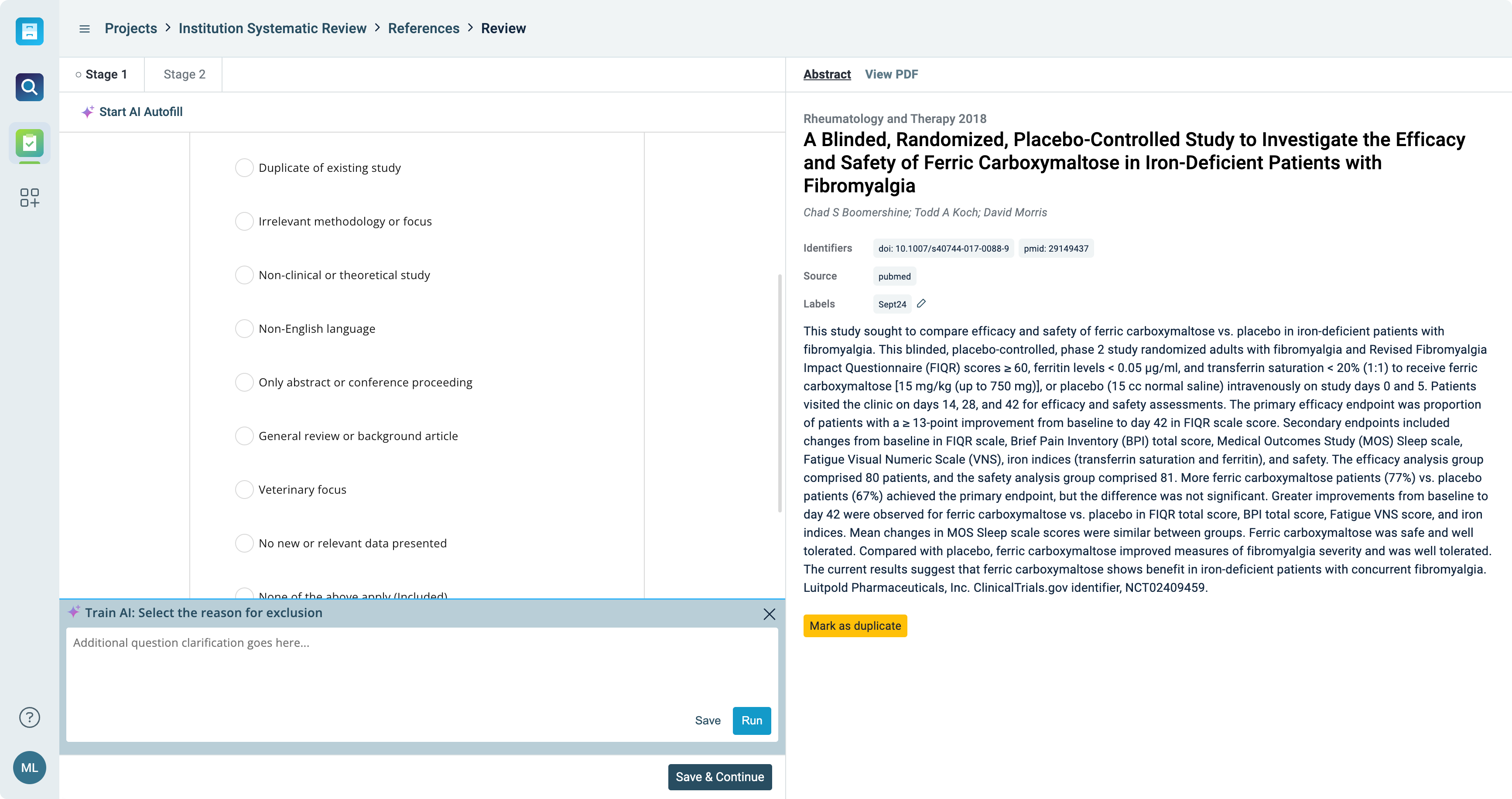
Build custom review workflows
- Implement multi-level screening for an in-depth literature review and screening
- Streamline the review process with your predefined inclusion and exclusion criteria
- Easily identify, manage, and review any conflicts in data entries when working with multiple reviewers, ensuring alignment and consistency
- Seamlessly integrate data from past reviews, ensuring continuity and time-saving efficiency
Depending on your department, industry, and goals, literature reviews vary greatly. ReadCube’s flexible and customizable Literature Review makes it simple for you to design the review that makes the most sense for your team.
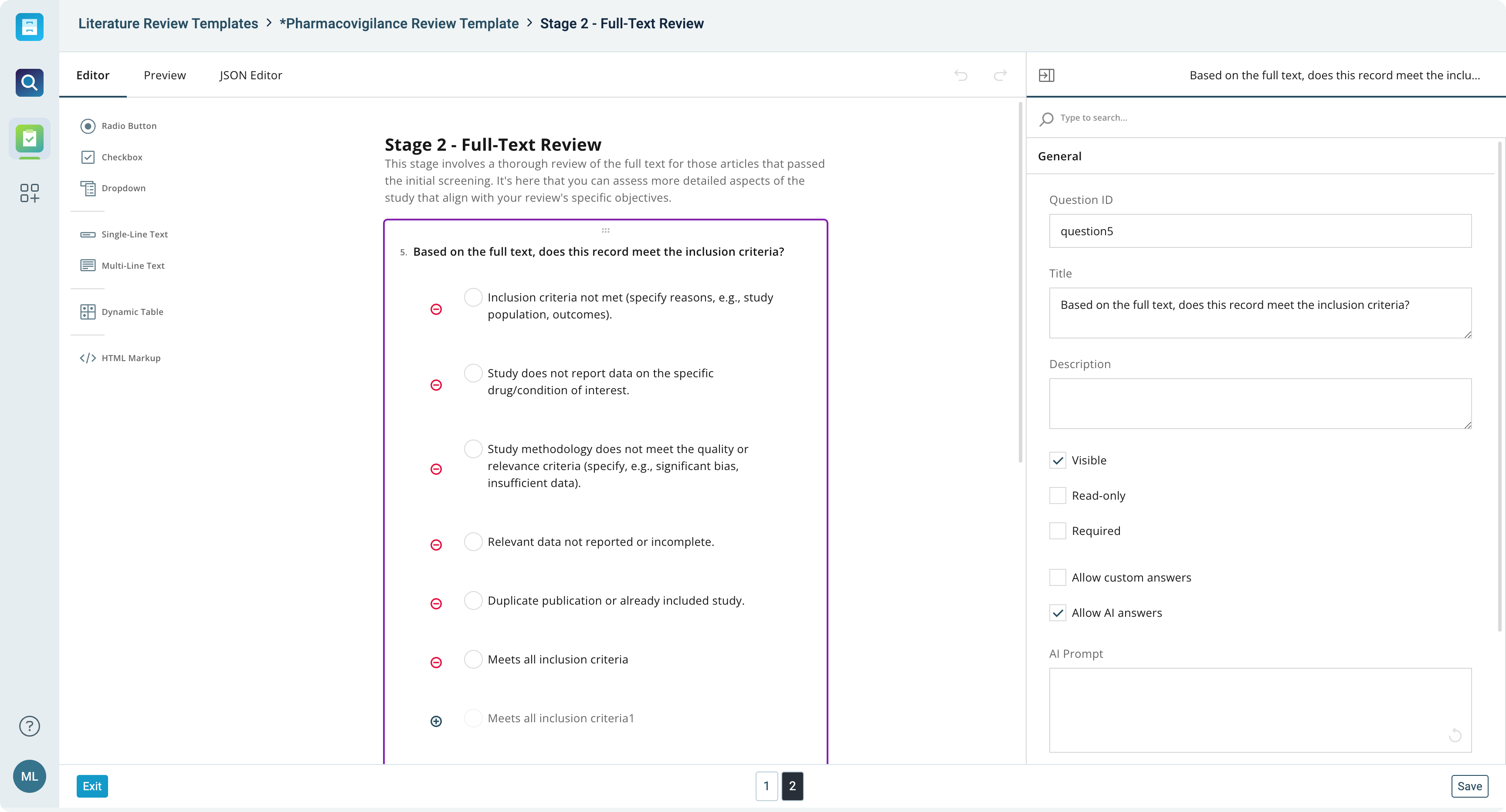
Ask the right questions
- Design and manage systematic review forms and questions with ease
- Add specific search results automatically to your review workflow
- Create subforms, select specific fields, implement conditional hidden fields, and manage shared fields
- Build advanced, calculated fields for enhanced accuracy in data assessment
Design the literature review workflow that actually works for your team with advanced and flexible form builder options.
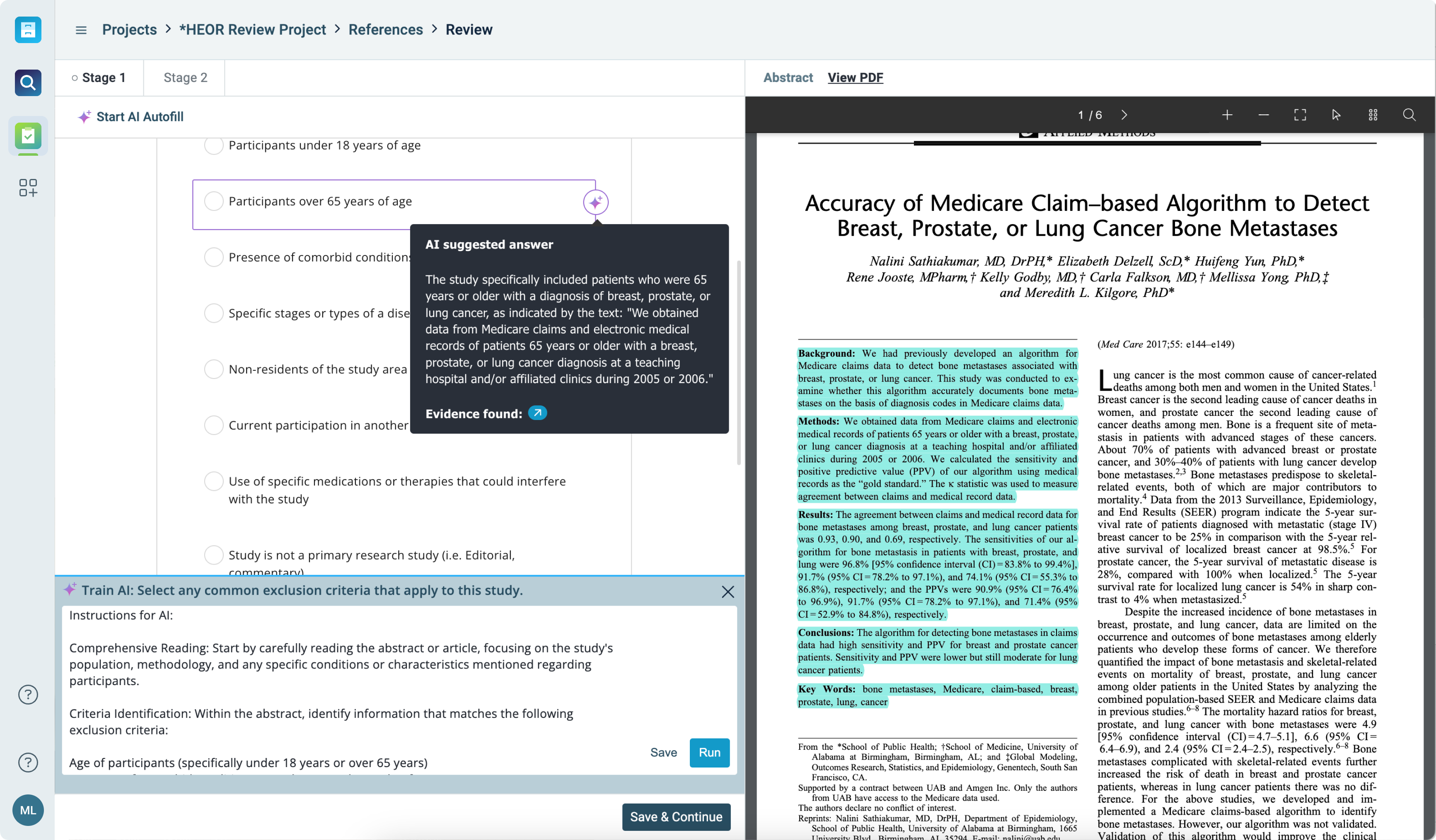
AI-enhanced review and analysis
- Make data-driven decisions faster with actionable AI insights that simplify complex reviews
- Automatically generate summaries, extract key data points, and create visual representations to support your analysis
- Leverage machine learning to identify patterns, gaps, and key insights across your literature set
Systematic reviews are faster, more organized, and enhanced by AI, allowing you to focus on generating insights, not managing paperwork.
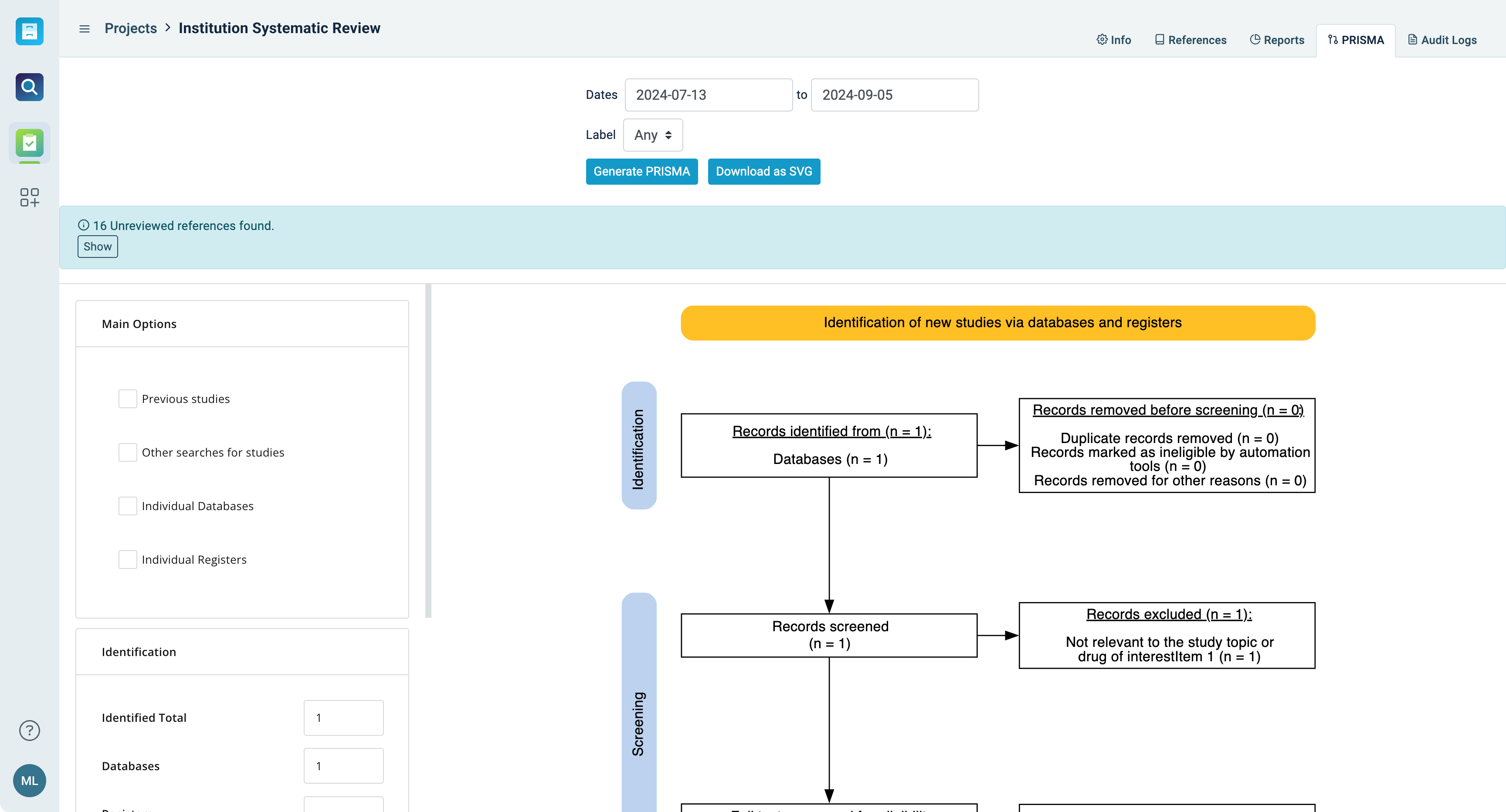
Share your findings
- Utilize PRISMA for structured reporting and visualization, providing detailed flow diagrams in editable formats
- Customize exports for reporting - including citation metadata, form data, and custom metadata fields
- Maintain a detailed audit log of all imports, changes, and identified conflicts, ensuring transparency and traceability
What’s the point of a review if it’s difficult to share results? Simplified and automatic reporting make it easy to share what you’ve learned - so your organization can make better evidence-based decisions.
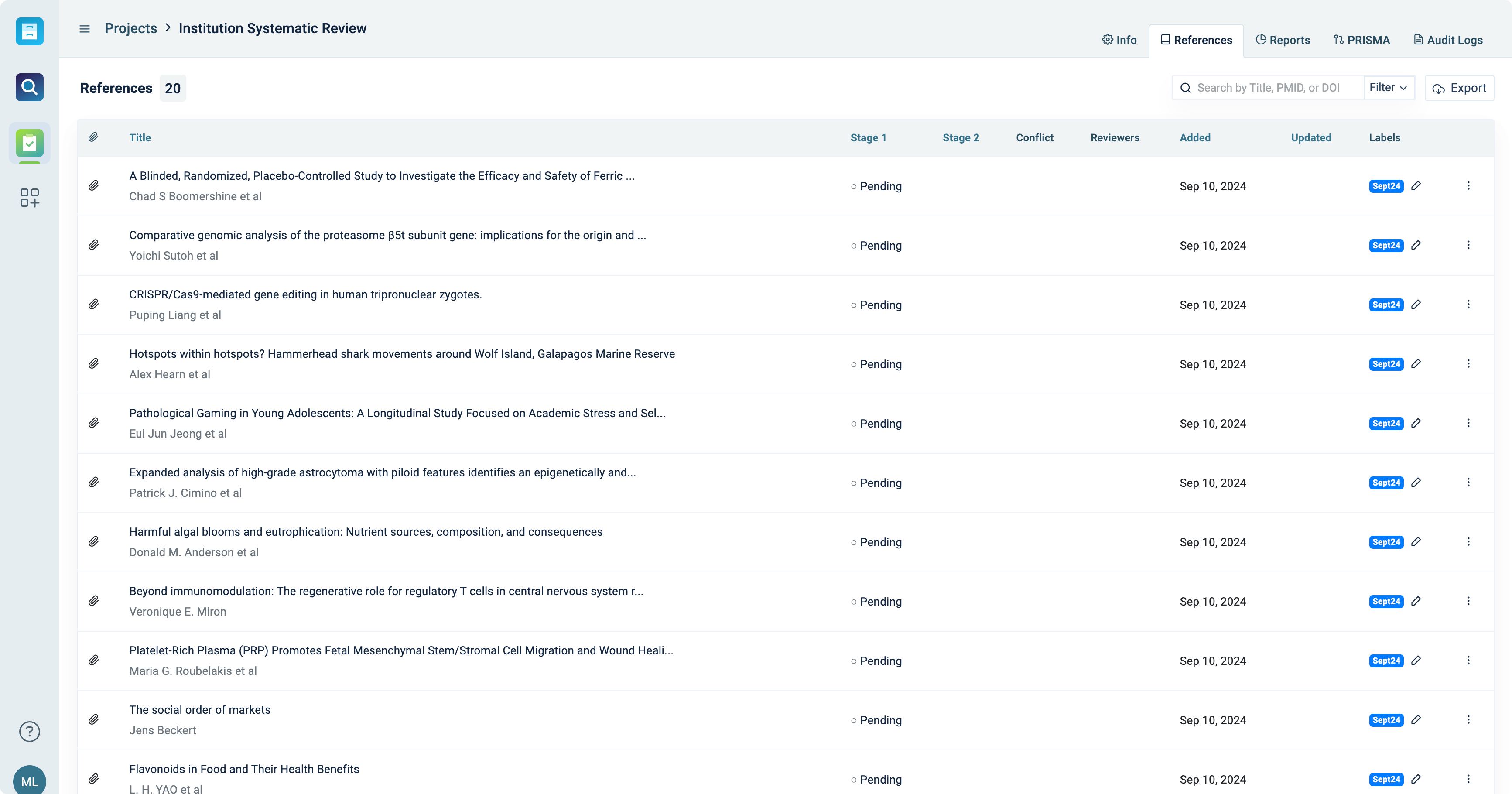
Manage your reviews.
- Seamlessly import data using common file types such as RIS, CSV, and nBib from third party databases
- Automatically flag duplicates upon import or manually flag duplicates as part of your review
- Admin dashboards show an overarching view of all projects, with the ability to assign form templates, construct new form templates, delegate reviewers to specific projects, and manage the status of ongoing projects
- Reviewer dashboards show only the projects and citations relevant to a reviewer’s role. Understand current project status, pinpoint potential conflicts, and seamlessly access reporting features for exclusion, inclusion, and PRISMA
Ensure your team is on track and making progress with advanced governance features.