
Boehringer Ingelheim Case Study
Modern businesses grow and succeed in today’s corporate climate for myriad different reasons. Some are known for their products, others for their services, and still others for strong brand loyalty. However, those organizations that
truly stand out from the pack as industry leaders all share one common factor: They embrace innovation.
 Innovation is not limited to the development or change of particular product offerings or services but also can take the form of evolving internal processes within a company’s daily operations. Outdated internal tools, technologies, and workflows can hinder an organization’s productivity at the most basic level - fueling staff frustration, extending project timelines and leading to additional operational costs overall.
As a leading global pharmaceutical company, innovation is second nature to Boehringer Ingelheim (BI). Innovation isn’t just about drug design but is in everything BI does, from process optimization to improving the tools used every day.
This culture is reflected in all of its teams, including the Scientific Information Center (SIC). The core task of the SIC is to provide global access to external information and knowledge from thousands of renowned journals and publishers via enterprise subscriptions and document delivery services. In this case study, Dr. Karlheinz Spenny and his team at the SIC share in their own words what triggered their internal innovation campaign moving from their legacy literature management solution to ReadCube and their experiences along the way.
Re-evaluating the Status Quo
Across Boehringer Ingelheim, we had a variety of different software products and solutions in place. Some sites within the company even built their own custom solutions based on open-source software. We had always wanted to harmonize our internal product landscape, but none of the solutions we were using fulfilled all the requirements of our users.
Most of our well-established products had been used for more than 10 years by different groups. They were installed on desktops and across R&D sites with no real connectivity across the community of users. They also needed to be maintained and adapted by our IT department, requiring significant resources to stay embedded in our ever-changing IT environment and systems landscape. This added complexity and invisible costs to maintain the status quo. It also was apparent that we were outgrowing the functionality that those systems offered.
The SIC is always looking to innovate in the ways that it fulfils its mission and that means ensuring that we have the most innovative tools for the BI team. One of the key responsibilities central to our function as BI´s “Corporate Library” is our strong focus on providing scientific information to BI’s Discovery Research Organization. Therefore, we are continuously scouting for innovative solutions and new products. We wanted a state-of-the-art solution that would minimize the need for internal IT support and maintenance efforts and we wanted a solution to be fit-for-the-future.
Cloud-based systems seemed to provide promising features such as central, secure, and integrated storage, seamless and easy access across our global organization, and most importantly, would allow colleagues to collaborate and share documents in various user-controlled libraries. We also needed a solution flexible enough to accommodate our future growth and evolving user needs.
Our users had high expectations for this new platform - seeking something new and exciting. There was much on the line for the SIC team, but we had complete confidence that ReadCube would deliver.
The Rollout & Reactions
As we wanted to provide our users with the best harmonized experience, we chose to complete our transition to MS Office
365 ahead of the ReadCube roll-out. This choice gave several advantages: everyone would be on the same platform, decreasing support challenges; everyone would have access to ReadCube’ newest features, and incompatibilities with legacy versions of Word would be minimised. With that in place, the ReadCube Implementation team led the way with an uncomplicated set-up process that took days, not weeks, to configure.
The adoption of ReadCube was remarkable...Even “conservative users”, who typically show more resistance to change than our younger “digital natives”, were converts.
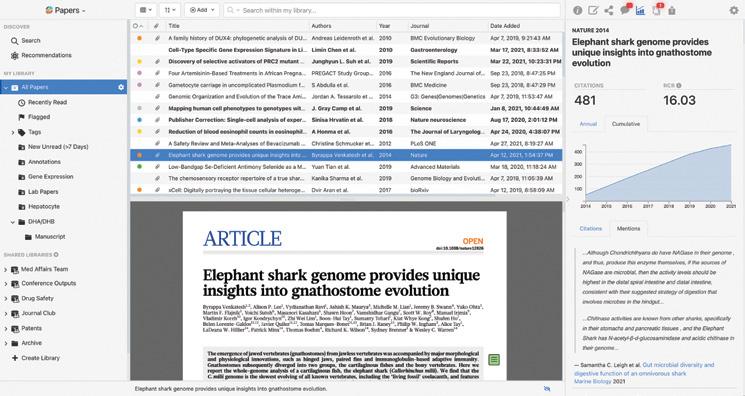
Customizable library layout with private and shared collections
Our whole onboarding process took place in the midst of the COVID-19 pandemic. While it could have been perceived as a less than ideal time to make a big change within the organization, for us, it all but drove us to accelerate roll-out plans. With over 40,000 BI employees transitioning to remote working, the need was never greater to have a flexible tool in place to enable convenient access to literature no matter where our team was working.
The adoption of ReadCube was remarkable. We began with an awareness campaign led by our SIC team, and leveraged the
intuitiveness of the platform, expert-led training sessions, and a wealth of video & support materials provided by the
ReadCube team to guide our users through this trans-formation process. Even “conservative users”, who typically show more resistance to change than our younger “digital natives”, were converts.
As we expected, the reaction to ReadCube has been overwhelmingly positive. Some of the features that really stood out to our users include:
- Easy transition of existing literature collections into the ReadCube platform
- Seamless integration with literature search venues like PubMed and Google Scholar or aggregator sites like Scopus and Ovid
- Collaborative libraries to help our teams work more efficiently
- Immediate access to full text via the browser extensions
- Auto-fetching of supplemental material for journal articles that are kept connected and linked together
- Article recommendations – a personalized discovery feature they never had before
- Easy authentication via single sign on (SSO)
- Perfect sync functionality between web, desktop, and mobile devices
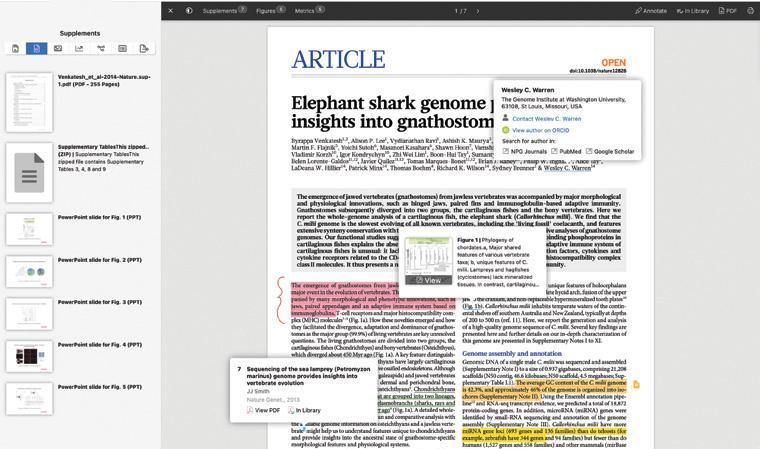
Enhanced PDF reading environment
Commitment to Product Innovation
We’ve been truly surprised by the agility of the ReadCube team and the pace of feature roll-outs. It’s nothing less than exceptional. In addition to monthly feature releases, they are incredibly receptive to our features requests – incorporating these ideas into their roadmap in a relatively short time. We have rarely seen such responsiveness from a supplier and we are confident that the company will continue to invest in enhancing the ReadCube platform. This is a perfect vendor partnership for us as the SIC team, and the broader BI community have no lack of ideas! We’re particularly excited about the upcoming release bringing semantic technologies across our library content and collections.
The entire experience has been overwhelmingly positive - a true “success story” for us here at the SIC and for our knowledge workers in the different Business Units across the company.
Reflections on the Overall Transition Process
While the “cost of changing” can be a concern for organizations looking at new processes/solutions, the benefits of switching to ReadCube have far outweighed the cost of making the change. The entire experience has been overwhelmingly positive - a true “success story” for us here at the SIC and for our knowledge workers in the different business units across the company.
We believe that choosing ReadCube as the default system for literature management is an investment into the future. We are delighted to finally have a high-performance, sustainable literature management solution in place that will continue to evolve alongside future innovations in digital technologies. What we have achieved within just 7 months after the roll-out of ReadCube can only be considered a jump to the next level of literature management for our research scientists and has positioned BI as front-runners within our industry.
— Dr. Karlheinz Spenny & SIC team
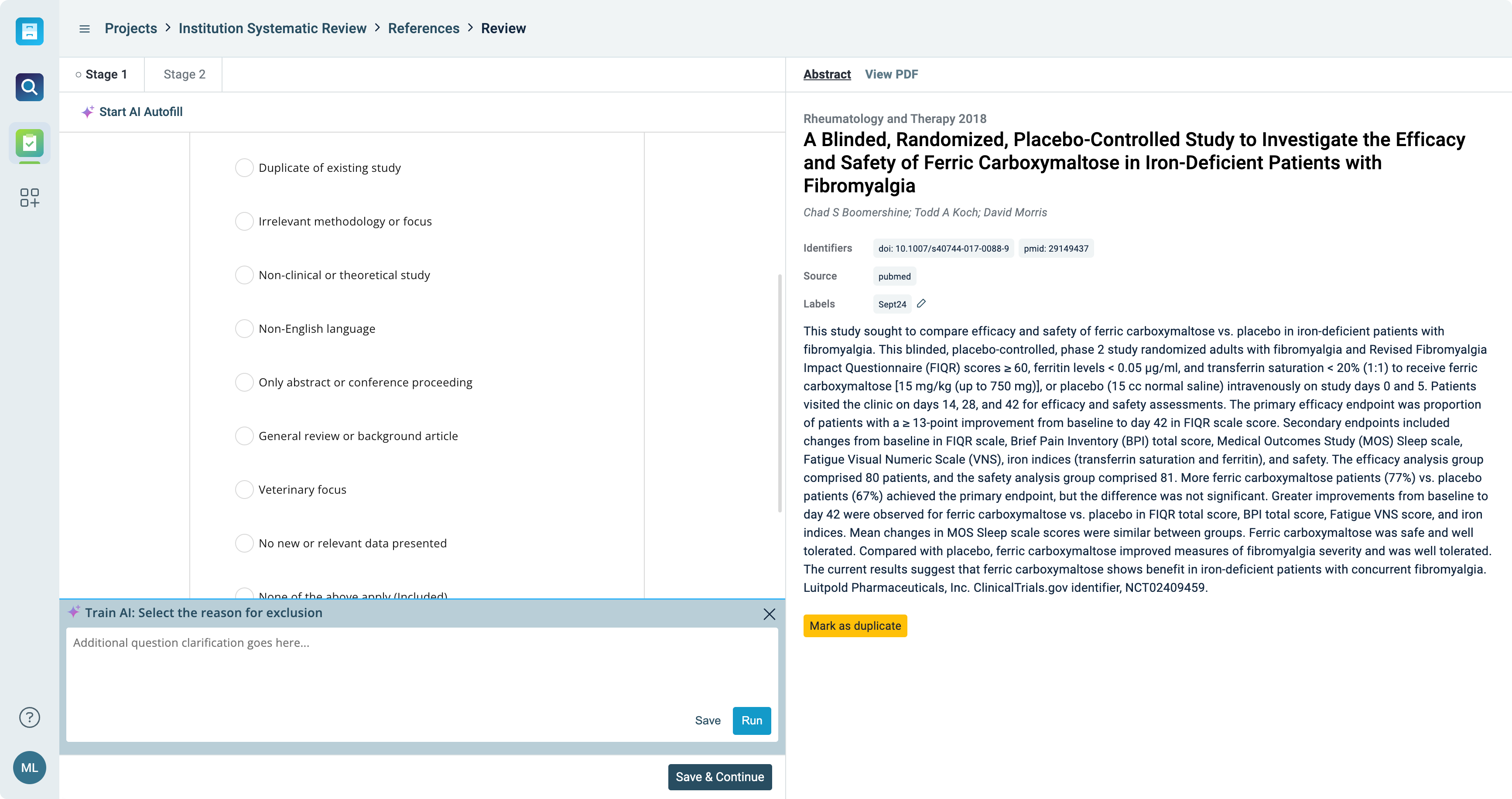
Build custom review workflows
- Implement multi-level screening for an in-depth literature review and screening
- Streamline the review process with your predefined inclusion and exclusion criteria
- Easily identify, manage, and review any conflicts in data entries when working with multiple reviewers, ensuring alignment and consistency
- Seamlessly integrate data from past reviews, ensuring continuity and time-saving efficiency
Depending on your department, industry, and goals, literature reviews vary greatly. ReadCube’s flexible and customizable Literature Review makes it simple for you to design the review that makes the most sense for your team.
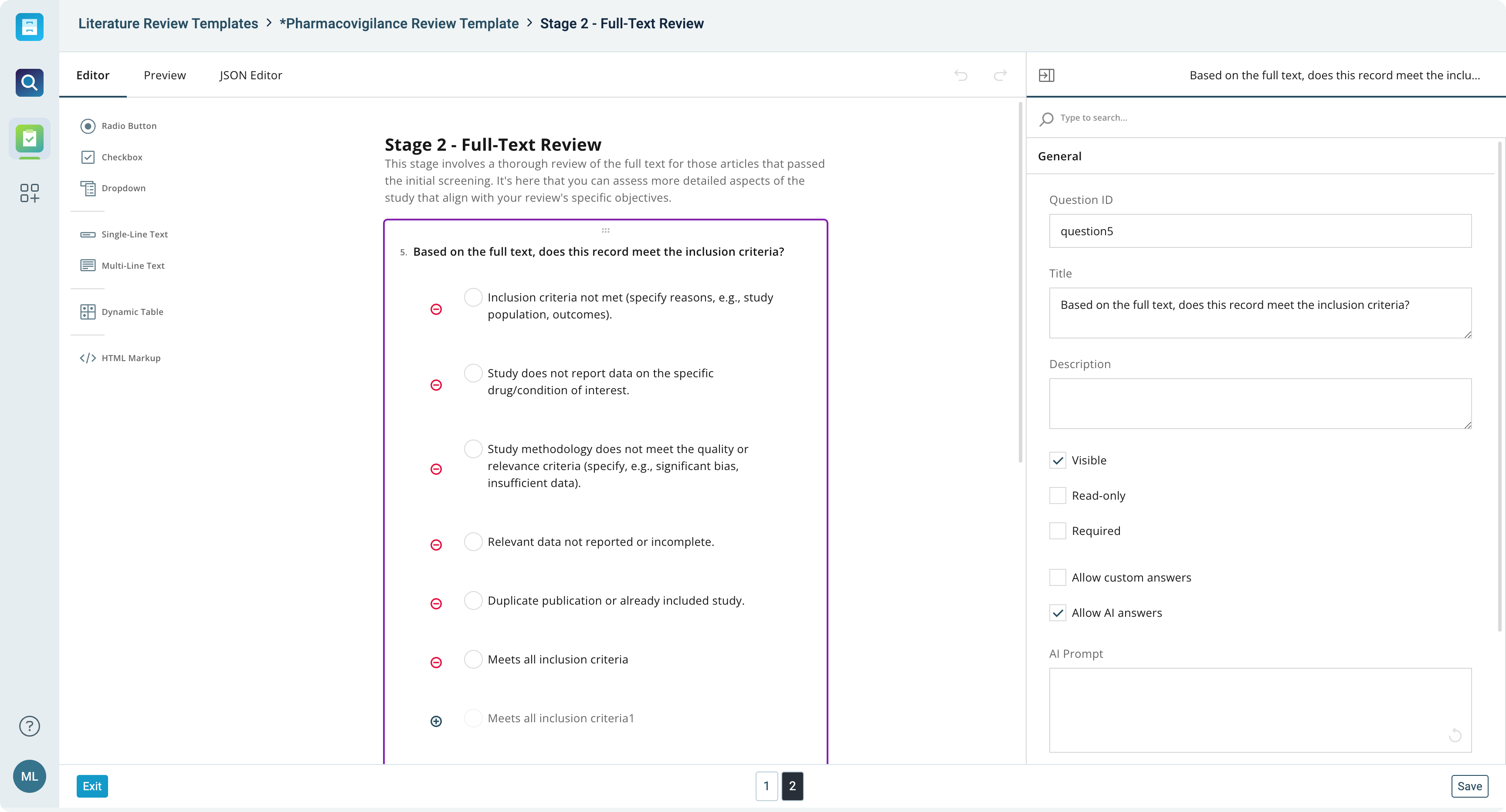
Ask the right questions
- Design and manage systematic review forms and questions with ease
- Add specific search results automatically to your review workflow
- Create subforms, select specific fields, implement conditional hidden fields, and manage shared fields
- Build advanced, calculated fields for enhanced accuracy in data assessment
Design the literature review workflow that actually works for your team with advanced and flexible form builder options.
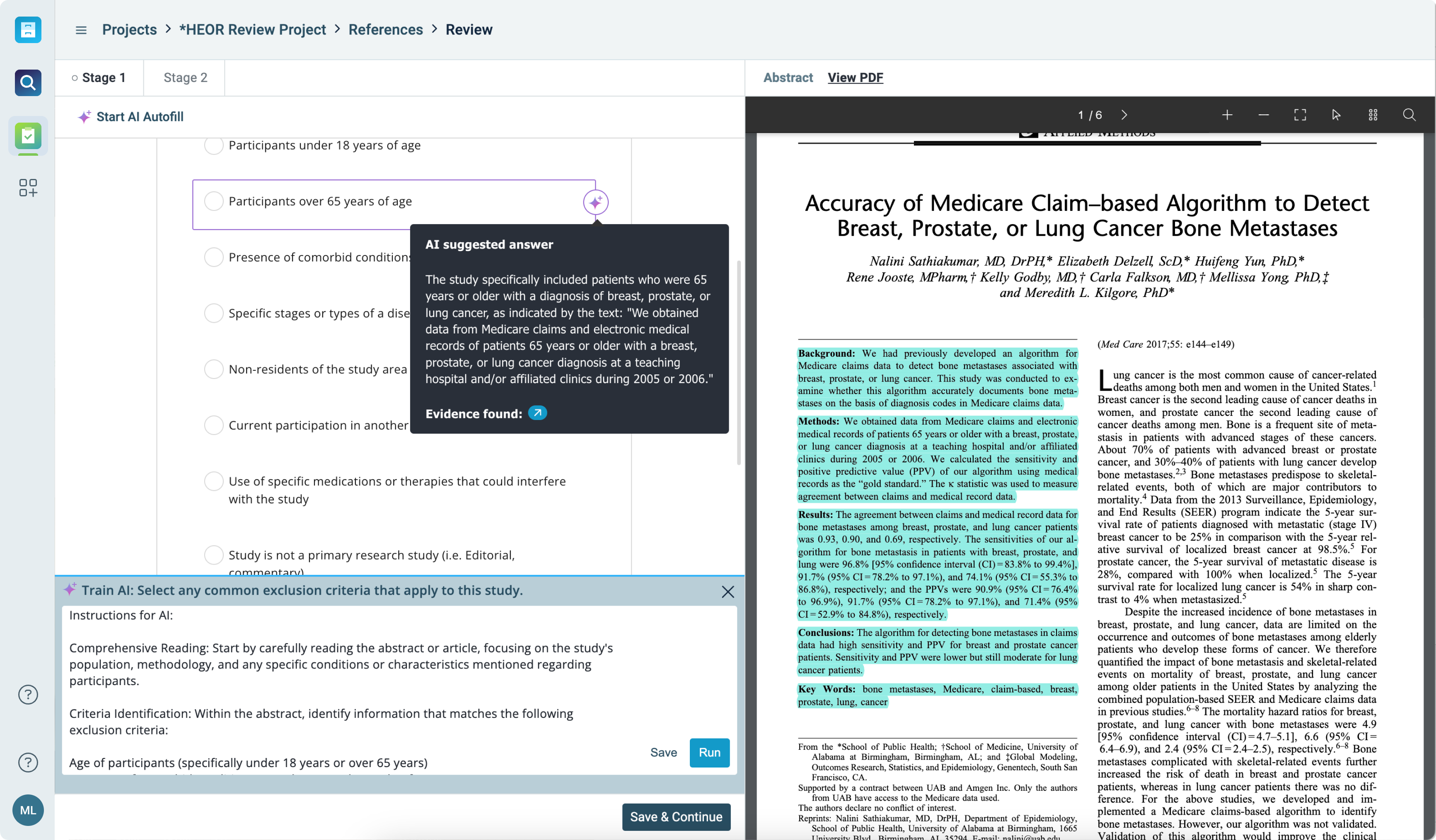
AI-enhanced review and analysis
- Make data-driven decisions faster with actionable AI insights that simplify complex reviews
- Automatically generate summaries, extract key data points, and create visual representations to support your analysis
- Leverage machine learning to identify patterns, gaps, and key insights across your literature set
Systematic reviews are faster, more organized, and enhanced by AI, allowing you to focus on generating insights, not managing paperwork.
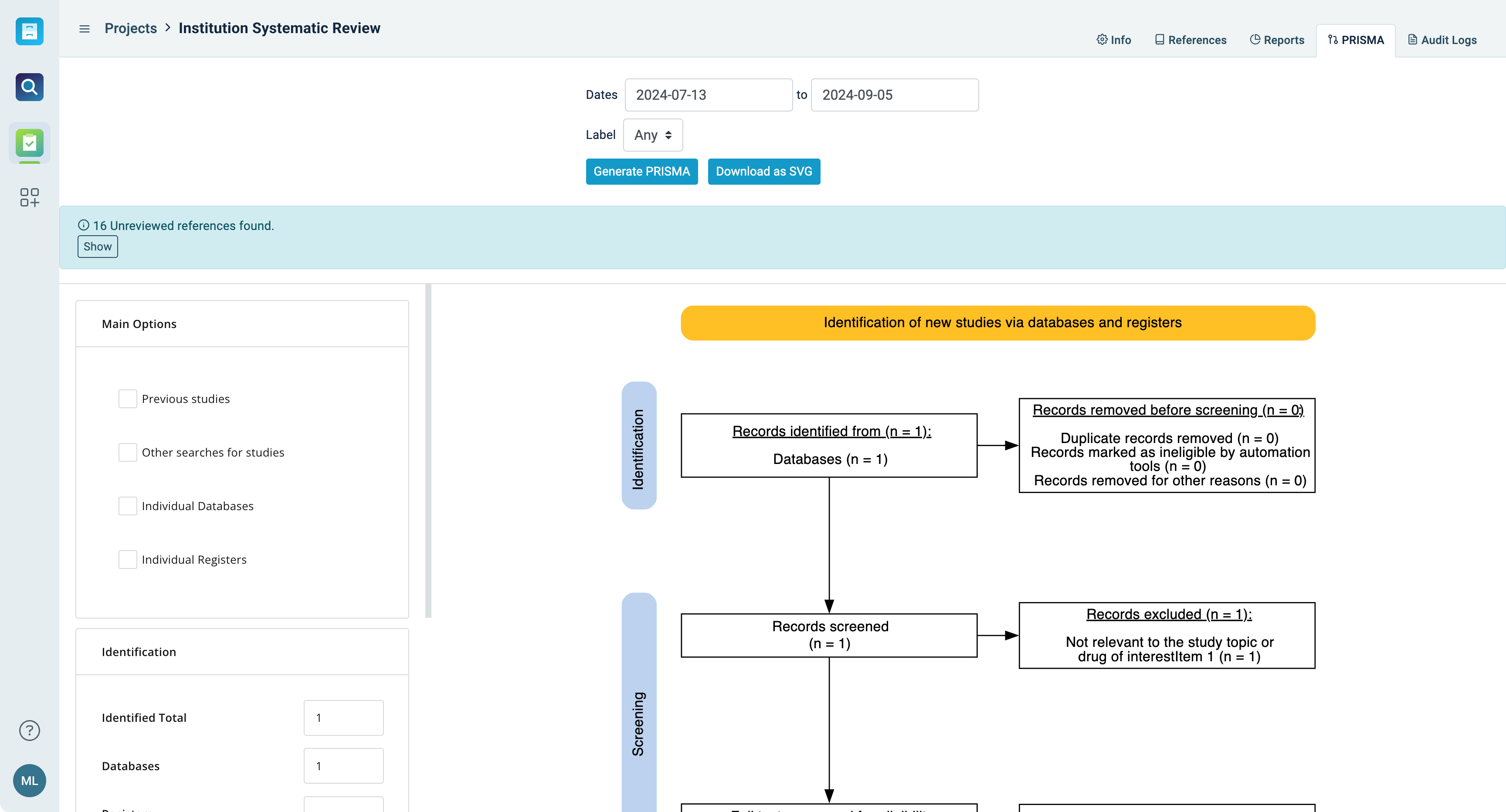
Share your findings
- Utilize PRISMA for structured reporting and visualization, providing detailed flow diagrams in editable formats
- Customize exports for reporting - including citation metadata, form data, and custom metadata fields
- Maintain a detailed audit log of all imports, changes, and identified conflicts, ensuring transparency and traceability
What’s the point of a review if it’s difficult to share results? Simplified and automatic reporting make it easy to share what you’ve learned - so your organization can make better evidence-based decisions.
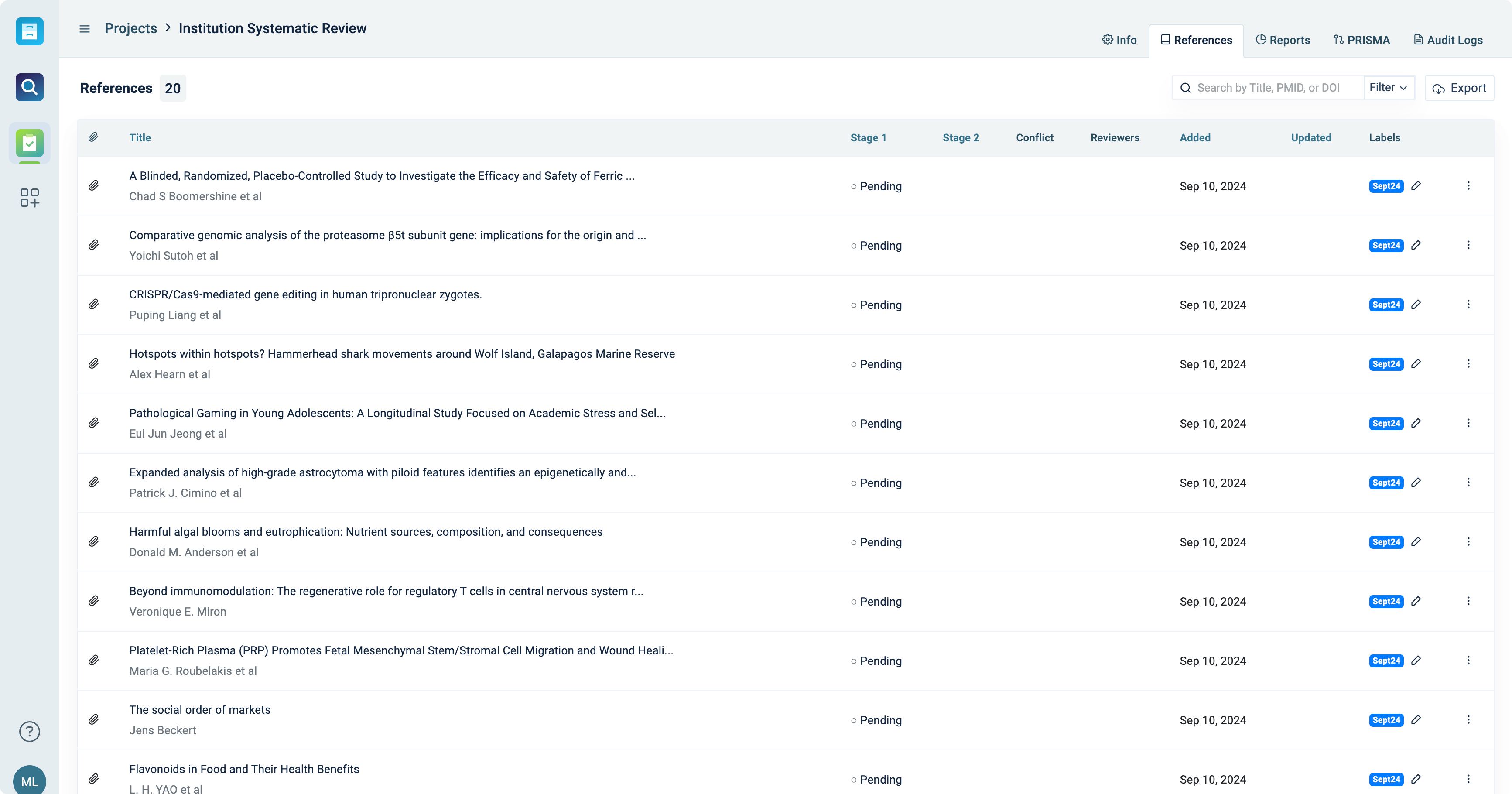
Manage your reviews.
- Seamlessly import data using common file types such as RIS, CSV, and nBib from third party databases
- Automatically flag duplicates upon import or manually flag duplicates as part of your review
- Admin dashboards show an overarching view of all projects, with the ability to assign form templates, construct new form templates, delegate reviewers to specific projects, and manage the status of ongoing projects
- Reviewer dashboards show only the projects and citations relevant to a reviewer’s role. Understand current project status, pinpoint potential conflicts, and seamlessly access reporting features for exclusion, inclusion, and PRISMA
Ensure your team is on track and making progress with advanced governance features.